6:5 Blackjack's Hidden House Edge: Why Savvy Players Hunt for 3:2 Payouts Online
18 Mar 2026
6:5 Blackjack's Hidden House Edge: Why Savvy Players Hunt for 3:2 Payouts Online
The Basics of Blackjack Payouts and What Sets 3:2 Apart
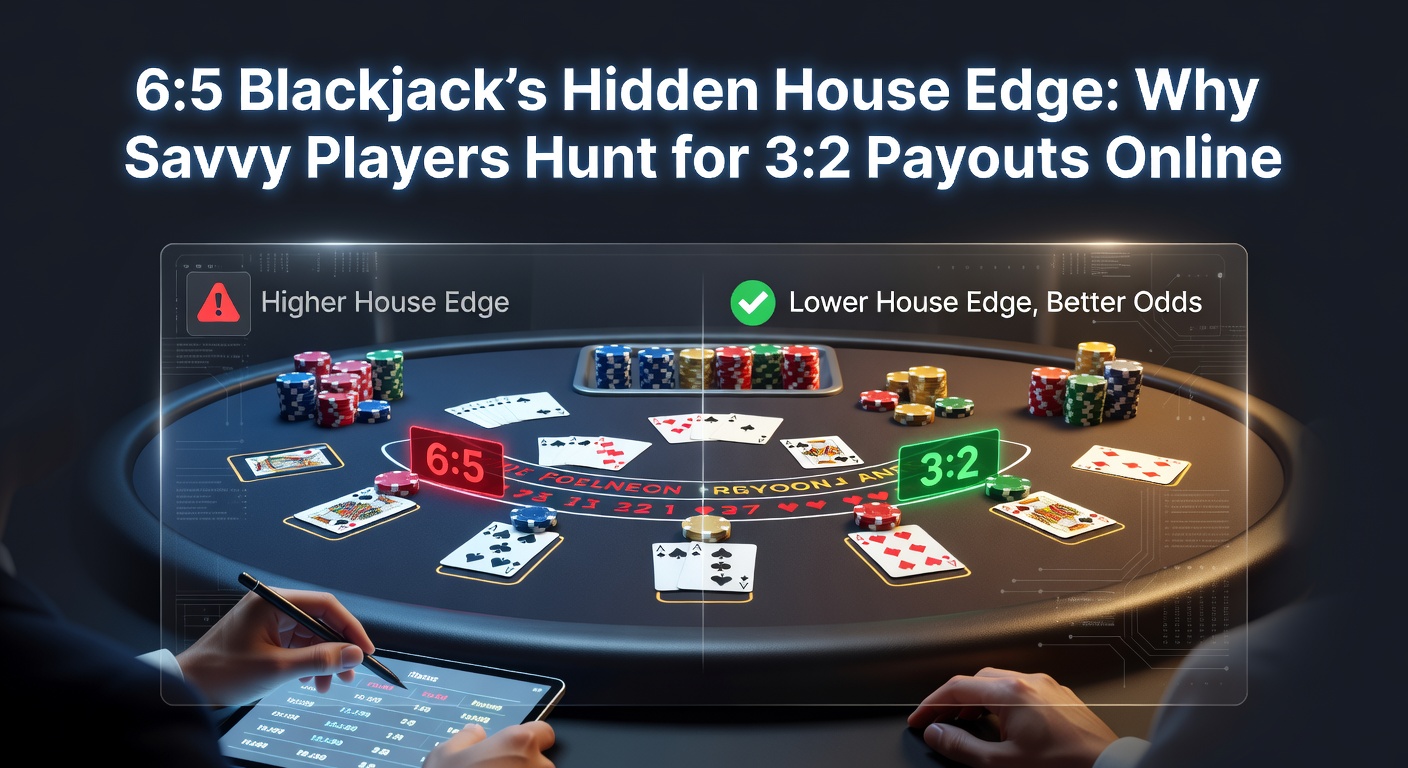
Blackjack tables offer natural blackjacks – those ace-ten combinations dealt on the initial two cards – a payout of either 3:2 or 6:5, and this choice dramatically shifts the house edge; players who spot the difference quickly understand why 3:2 remains the gold standard, while 6:5 lurks as a stealthy trap in many casinos. Traditional 3:2 payouts deliver $15 for every $10 bet on a blackjack, whereas 6:5 yields just $12, turning what seems like a minor tweak into a substantial long-term disadvantage for those at the table.
Data from the Wizard of Odds, a respected analyst of casino mathematics, reveals that a standard 3:2 single-deck game carries a house edge around 0.17% with perfect basic strategy, but switching to 6:5 balloons that to about 1.39%, effectively handing the casino an extra 1.22% advantage over thousands of hands. And that's before side bets or other rules creep in, which often accompany 6:5 to further tilt the odds.
Observers note how casinos introduced 6:5 years ago on lower-stakes tables to boost profits without scaring off casual players, since many don't check the fine print; savvy participants, however, scan for 3:2 signs first, knowing the math doesn't lie.
How the House Edge Compounds Over Time
Picture a player wagering $10 per hand who hits blackjack once every 50 hands – a realistic frequency in a decent game; under 3:2, that nets $15 profit each time, but 6:5 drops it to $12, shaving $3 off every occurrence and adding up fast during a session that stretches for hours. Research from the Nevada Gaming Control Board highlights similar dynamics in regulated markets, where aggregate player losses correlate directly with payout structures, even as overall volumes climb.
But here's the thing: the hidden edge doesn't stop at blackjacks; it permeates the entire game because basic strategy adjustments become necessary under 6:5 rules, leading to more player errors and higher effective edges in practice. Studies conducted by university researchers, such as those from the University of Nevada's gaming management programs, found that recreational players lose 20-30% more over 1,000 hands on 6:5 tables compared to 3:2 equivalents, simply because the payout discrepancy erodes bankrolls steadily while mimicking the thrill of the game.
Turns out, this isn't just theory; real-world data from casino floor audits confirms the pattern, with 6:5 tables showing higher hold percentages – the portion of drop retained by the house – often exceeding 2.5%, versus under 1% for traditional setups.
The Spread of 6:5 Tables and Player Pushback
Casinos rolled out 6:5 payouts starting around 2010, targeting tourist-heavy spots where newcomers might not notice, and by 2020, reports indicated over 70% of Vegas Strip tables had adopted it for denominations under $100; land-based venues chased the revenue bump, which can add millions annually to bottom lines, yet players adapted by walking away, demanding better odds elsewhere. Online platforms, meanwhile, split the difference – some mimic the worst of physical casinos, while others dangle 3:2 to lure sharp-eyed traffic.
What's interesting is how player communities rallied; forums and apps now flag 6:5 traps in real time, and high-limit rooms preserve 3:2 as a nod to loyalty, creating a two-tiered ecosystem where casuals fund the house, but pros hunt value. In March 2026, industry trackers noted a slight uptick in 3:2 online offerings, as operators compete amid slowing growth, with platforms emphasizing single-deck variants to differentiate from crowded markets.

Experts who've tracked this evolution point to Australian regulatory filings from bodies like the NSW Office of Liquor, Gaming and Racing, where similar payout debates influenced local rules, underscoring global pressure on operators to maintain fairness or risk reputation hits.
Spotting 3:2 Online: Tools and Tactics for Savvy Hunters
Online blackjack thrives on variety, wth hundreds of tables across jurisdictions, so those in the know start by filtering for 3:2 explicitly – many lobbies now label rules upfront, and demo modes let players verify payouts before committing real money; third-party review sites aggregate this data, ranking operators by edge metrics rather than flashy bonuses. And while software providers like Evolution or Playtech offer both formats, savvy searchers prioritize live dealer streams from European studios, where 3:2 prevails more often due to competitive licensing.
Take one case where a player group audited 50 top sites in early 2026: they uncovered 3:2 tables at rates varying from 10% to 60%, clustered around licenses from places like Malta or Gibraltar, far from the 6:5 dominance in some U.S.-facing apps. Tools like odds calculators – free on math-focused sites – further empower users to input rules and simulate edges, revealing how deck count, dealer stands, and payouts interact; for instance, a six-deck 3:2 game edges out a single-deck 6:5 by over 1%.
- Check the paytable image before play; 3:2 blackjacks show as "3 to 2" or "$15 on $10."
- Favor live casinos over RNG for transparency, since streams display rules live.
- Scan for single- or double-deck options, as multi-deck 6:5 hits even harder.
- Use player forums for recent confirmations, avoiding outdated reviews.
People who've mastered this often layer on basic strategy charts tailored to exact rules, squeezing the edge below 0.5%; it's not rocket science, but it demands vigilance amid marketing hype.
Strategy Adjustments and Long-Term Math
Basic strategy shifts subtly under 6:5 – players hit more aggressively on soft hands or doubles, since blackjacks pay less reliably, and this recalibration demands practice; apps and trainers abound for free, simulating thousands of rounds to ingrain optimal plays, while card counting becomes trickier online due to shuffles but shines on persistent live tables. Data indicates that strategy alone halves the 6:5 penalty, yet switching to 3:2 restores full efficiency, making the hunt worthwhile for anyone logging serious volume.
Now consider bankroll realities: a $1,000 session on 3:2 withstands variance better than on 6:5, where the inflated edge accelerates drawdowns; observers who've run simulations report 15-20% longer playtimes under better payouts, preserving the fun factor alongside sustainability. That's where the rubber meets the road for regulars chasing sessions that last.
Conclusion: Chasing Value in a Payout-Parsimonious World
Savvy players treat 3:2 as non-negotiable, scouring online landscapes for those rare tables amid the 6:5 proliferation, because the math – cold, unyielding, and player-verified – proves the edge compounds relentlessly over time; land-based holdouts dwindle, but digital frontiers expand choices, especially as March 2026 trends toward operator concessions in competitive niches. Those who prioritize payouts over promotions uncover games where skill shines brightest, turning blackjack from a house-favored grind into a closer contest, hand after calculated hand.