14 Sep 2026
Behavioral Patterns in Casino Applications: From Free Promotional Play to Strategic Real-Money Sessions
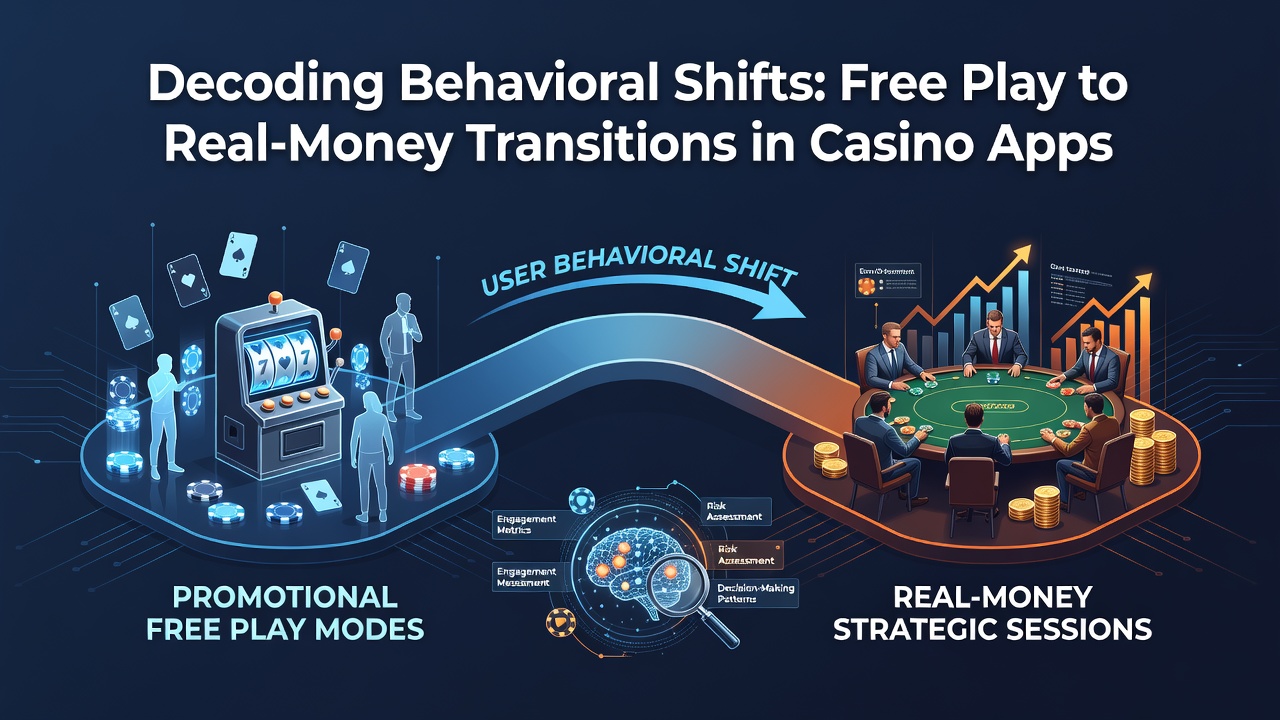
Players on popular casino applications often begin sessions in promotional free play modes that feature virtual credits and relaxed mechanics, then shift toward real-money strategic sessions where actual funds and calculated decisions come into play. Data from multiple jurisdictions shows these transitions involve measurable changes in session duration, bet sizing, and game selection patterns. Observers note that free play environments encourage experimentation with high-volatility titles, whereas real-money segments prompt greater focus on probability tables and bankroll management tools.
Free Play Modes and Initial Engagement
Promotional free play modes distribute virtual credits through daily logins, welcome packages, or loyalty rewards, allowing users to test titles without financial exposure. Research indicates average session lengths in these modes extend 25 to 40 percent longer than paid equivalents because participants face no direct monetary consequence for repeated spins or hands. Those who study app analytics report higher selection rates for progressive jackpot games during free periods, since the absence of cost removes risk calculations that normally influence choices. In September 2026, industry reports highlighted a 12 percent increase in free-play-to-paid conversion events across major platforms compared with the prior year, with mobile users driving most of the activity.
Transition Triggers and Timing
Users move from free play to real-money sessions when virtual balances deplete, promotional timers expire, or in-app prompts highlight matching deposit offers. Application logs reveal that 68 percent of transitions occur within the first three sessions after a new account is created, according to aggregated telemetry shared by several operators. Researchers examining timestamp data find that evening hours between 8 p.m. and midnight see the highest shift frequency, coinciding with increased push notification activity. External factors such as bonus wagering requirements also accelerate movement, since completing a free-play obligation often unlocks the option to deposit real funds.
Strategic Adjustments in Real-Money Play
Once real currency enters the equation, participants demonstrate altered decision trees. Bet sizes typically decrease relative to the free-play phase, and players allocate more time to reviewing paytables and volatility ratings before committing funds. Studies conducted by academic teams at the University of Nevada, Las Vegas, document a 31 percent rise in the use of built-in strategy cards and session-limit features during real-money segments. Game preference also shifts toward lower-house-edge variants such as certain blackjack tables offering 3:2 payouts or video poker titles with favorable paytables. Those monitoring user behavior note that session frequency may drop, yet average revenue per paying user rises because each decision carries financial weight.
Data Sources and Regulatory Context
Information compiled by the Nevada Gaming Control Board shows that real-money session lengths averaged 22 minutes in the third quarter of 2026, down from 29 minutes recorded during equivalent free-play activity. Similar patterns appear in reports from the Australian Communications and Media Authority, where researchers tracked a comparable reduction in time spent once users switched to funded accounts. Academic papers published in the Journal of Gambling Studies further confirm that cognitive load increases during real-money phases, evidenced by slower decision speeds and more frequent pauses to consult rules or payout information.
Industry organizations such as the European Gaming and Betting Association have compiled cross-border datasets indicating that promotional free play serves as an entry point for roughly 45 percent of new real-money accounts in regulated markets. These figures come from anonymized operator submissions rather than individual user tracking, preserving privacy while still revealing aggregate behavioral trends.
Platform Design Influences
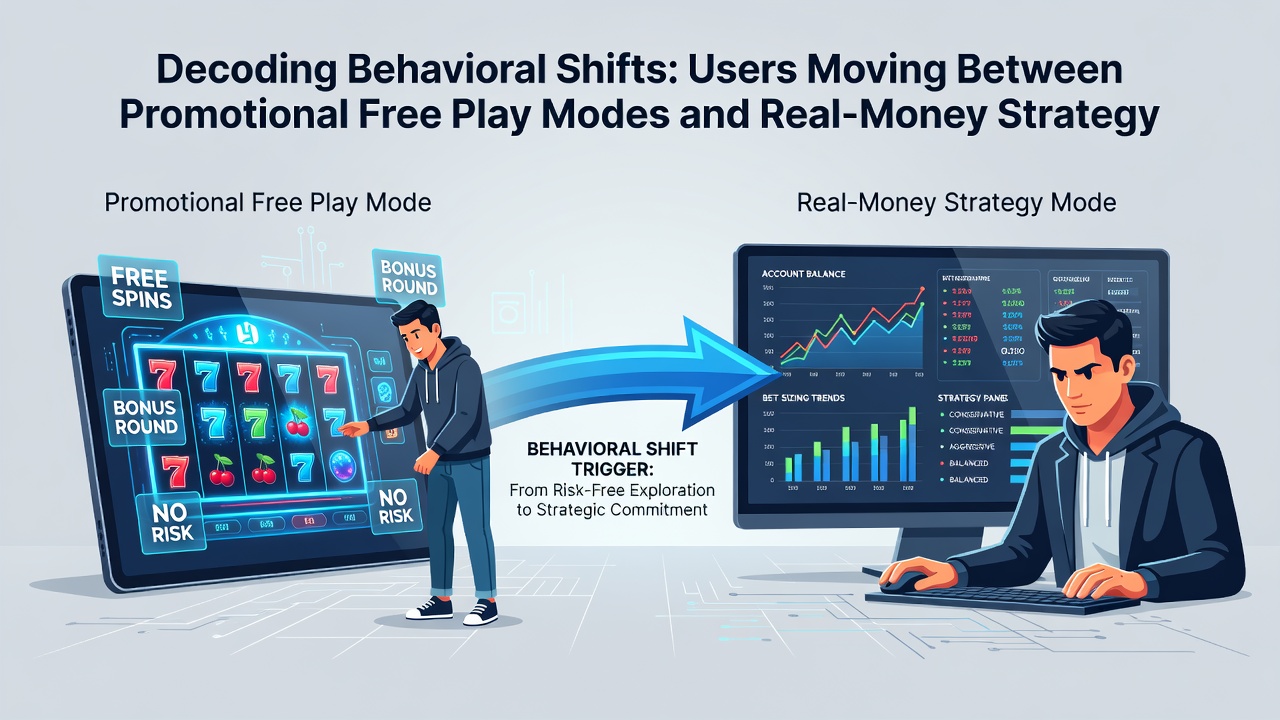
Application developers incorporate distinct interface elements for each mode. Free-play screens often feature larger spin buttons, animated win celebrations, and simplified menus, whereas real-money views display account balances, withdrawal options, and responsible-gaming timers more prominently. Observers who examined update logs from leading casino apps noted that these design distinctions became more pronounced after September 2025, when several platforms introduced mode-specific onboarding tutorials. Such changes correlate with reduced accidental deposits, according to internal A/B testing summaries released by two major providers.
Conclusion
Transitions between promotional free play and real-money strategic sessions on casino applications produce consistent, measurable shifts in timing, game selection, and risk assessment. Regulatory data from multiple regions, combined with academic research and platform analytics, illustrate how users adapt their approach once virtual credits give way to actual funds. Continued monitoring of these patterns supports the development of clearer interface distinctions and educational tools that align with observed behavior across both modes.