Cracking Online Poker Tables: Hunt for Soft Spots and Stack Sessions That Win
15 Mar 2026
UK Gambling Commission Reports £4.3 Billion GGY for Q2 2025/26 as Remote Betting and Casinos Drive Growth

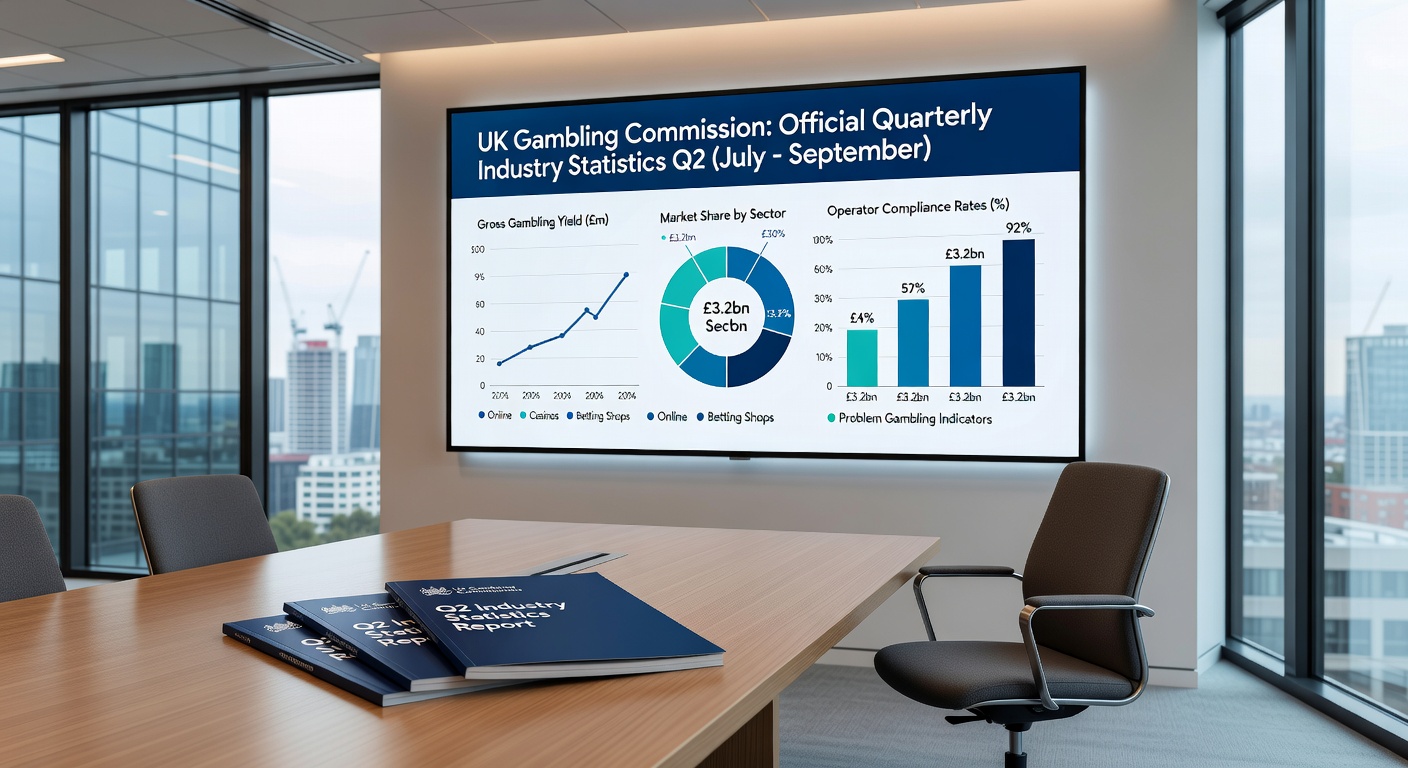
The UK Gambling Commission has unveiled its official quarterly industry statistics for the second quarter of the 2025/26 financial year—covering July to September 2025—revealing a gross gambling yield (GGY) of £4.3 billion across Great Britain's customer-facing gambling industry, including lotteries; this figure marks a 6.6% increase compared to the same period in 2024, with remote sectors emerging as the primary drivers behind the uptick.
Breaking Down the Headline Figure
GGY, which represents the net winnings retained by gambling operators after paying out prizes, serves as a key barometer for industry health; observers note how this £4.3 billion total encompasses everything from high-street betting shops to online platforms and national lotteries, painting a picture of sustained activity even as the financial year stretches toward its March 2026 close. Data indicates that the growth stems largely from digital channels, where convenience and broader accessibility continue to pull in participants; those tracking the sector have seen remote gambling consistently outperform traditional venues in recent quarters, and Q2 2025 delivers more evidence of that pattern.
But here's the thing: while the overall number grabs headlines, the real story unfolds when experts dissect contributions by sector, revealing how online betting, casinos, and bingo raked in £2.0 billion collectively—a substantial slice that underscores the shift toward remote participation; land-based operations, although holding steady in some areas, contribute the balance alongside lotteries, yet they trail the digital surge in percentage growth terms.
Remote Sectors Take the Lead
Remote casino, betting, and bingo activities generated £2.0 billion in GGY during this period, fueling much of the 6.6% year-on-year rise; figures from the Commission's February 2026 release highlight how these online verticals benefited from increased operator marketing and technological enhancements, drawing steady traffic without the physical constraints of brick-and-mortar sites. People who've analyzed past quarters often point out that remote betting alone tends to fluctuate with major sporting events, but casinos and bingo provide more consistent yields, smoothing out seasonal dips.
Take one case from the data: the remote segment's performance aligns with broader trends where smartphone penetration and faster internet speeds enable anytime access, so participants engage more frequently, boosting operator revenues; experts have observed similar patterns in prior years, where remote GGY climbs even as economic pressures mount elsewhere in the economy.
Land-Based Betting Holds Ground Amid Shop Numbers
Turning to physical venues, non-remote betting shops numbered 5,782 across Great Britain in Q2, a figure that reflects operational stability despite closures in previous years; these shops produced £592 million in GGY, accounting for 48.2% of the total land-based GGY, which shows betting as the dominant force on high streets even while facing competition from apps and websites. And while the remote boom steals the spotlight, land-based betting's contribution remains vital, supporting jobs and local economies in ways digital platforms can't replicate.
What's interesting here is the resilience: data shows non-remote betting grew modestly within its category, buoyed by in-person events like horse racing meets and football matches that draw crowds to shops; observers who've followed shop counts over time note how 5,782 represents a plateau after years of contraction, suggesting operators have adapted by focusing on high-traffic locations and hybrid models blending physical and online offers.
Context Within the Full Financial Year
As the 2025/26 financial year progresses toward March 2026, Q2's results provide a midpoint snapshot, with earlier quarters setting the stage for this remote-led acceleration; lotteries, included in the £4.3 billion total, continue their role as a steady performer, often appealing to a demographic less inclined toward betting or slots, yet their exact Q2 breakdown awaits deeper dives into the full report. Those studying year-to-date trends discover that cumulative GGY through Q2 likely positions the industry for another strong annual close, assuming no major regulatory shifts disrupt the momentum.
Yet the numbers also reveal nuances: while total GGY rose 6.6%, land-based segments outside betting—such as arcades or bingo halls—contributed the remaining 51.8% of non-remote totals, indicating a diversified base that cushions against over-reliance on any single channel; researchers point to this balance as a sign of maturity, where growth doesn't come at the expense of traditional pillars.
Sector-Specific Insights and Comparisons
Diving deeper, the £592 million from non-remote betting underscores its heft within land-based operations, where it claims nearly half the pie; this equates to average daily yields per shop hovering around certain benchmarks that operators track closely, although exact per-venue figures vary by region and footfall. Remote sectors, by contrast, scale effortlessly, with £2.0 billion spread across countless platforms, allowing for 24/7 operation that betting shops simply can't match.
Comparisons to 2024 sharpen the picture: that 6.6% lift means an extra £ roughly 268 million in the coffers for Q2 alone, much of it from remote channels where innovation—like live dealer games or in-play betting—keeps engagement high; people familiar with the data often highlight how post-pandemic habits solidified online preferences, turning temporary spikes into enduring growth.
So, as March 2026 approaches with Q3 and Q4 data on the horizon, stakeholders watch how these trends evolve; the Commission's stats, released in February 2026, arrive at a time when operators finalize budgets and regulators assess compliance, making Q2 a pivotal reference point.
Implications for Operators and Regulators
Operators in remote spaces celebrate the £2.0 billion haul, which validates investments in tech and compliance tools required under UK licensing; betting shop owners, managing those 5,782 outlets, focus on retention strategies amid the digital shift, often integrating apps to bridge the gap. Data from the quarterly report suggests steady participation rates underpin the GGY rise, with no sharp drops in active accounts signaling broad appeal.
Regulators at the Commission use these figures to calibrate policies, ensuring consumer protections scale with revenues; for instance, the 48.2% land-based betting share prompts targeted oversight on high-street vulnerabilities like problem gambling hotspots. And while lotteries round out the total, their inclusion broadens the view, showing how national draws complement private sector dynamism.
Turns out, the interplay between remote dominance and land-based endurance defines Q2's narrative, where £4.3 billion reflects not just profits but an ecosystem adapting in real time.
Conclusion
Q2 2025/26 stands out with its £4.3 billion GGY, a 6.6% year-on-year gain propelled by £2.0 billion from remote casino, betting, and bingo, alongside £592 million from 5,782 non-remote betting shops that capture 48.2% of land-based yields; as the financial year heads into its final stretch by March 2026, these statistics offer a factual benchmark for what's working—and where evolution continues—in Great Britain's gambling landscape. Experts anticipate future quarters will build on this foundation, with remote sectors likely sustaining the lead while physical venues prove their lasting value.