Dealer Stands on Soft 17: The Rule That Tips Blackjack Odds in Online Play
2 Apr 2026
Dealer Stands on Soft 17: The Rule That Tips Blackjack Odds in Online Play
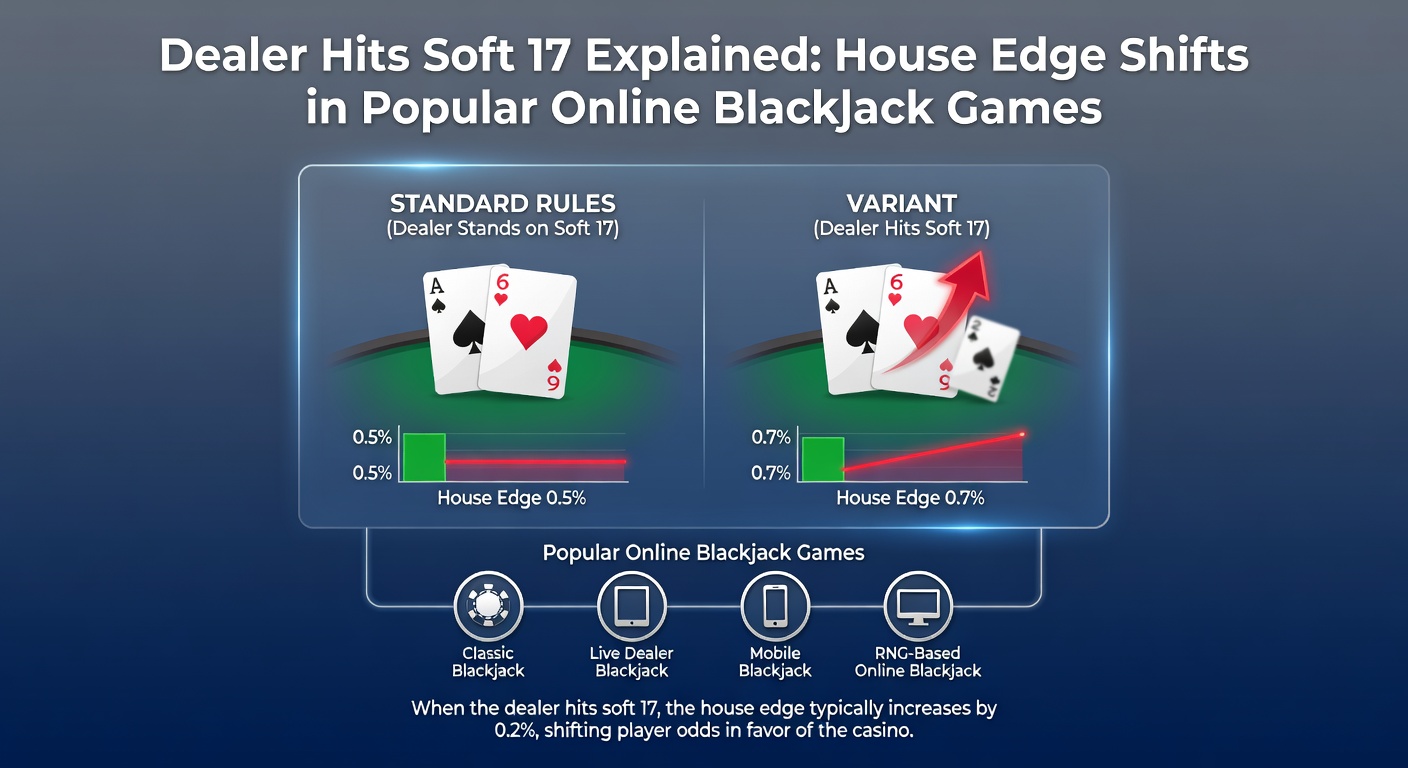
Unpacking Soft 17 in Blackjack Basics
Blackjack players encounter the term "soft 17" frequently, yet its nuances shape gameplay profoundly; a soft 17 arises when an ace counts as 11 alongside a six, totaling 17, but the hand remains flexible since the ace can shift to 1 if needed, avoiding busts on hits. Dealers face this spot routinely, and casinos dictate whether they hit or stand, altering dynamics across tables both live and digital. Data from longstanding simulations reveals these choices influence outcomes directly, with house edges fluctuating by up to 0.2 percentage points based on the rule alone.
Observers note how online platforms standardize variants like European Blackjack or Atlantic City rules, where dealer actions on soft 17 become pivotal; in one common setup, dealers hit, pushing the house advantage higher, while standing lowers it, giving players a measurable break. This distinction, embedded in game lobbies worldwide, prompts savvy participants to scan rules before play, since small shifts compound over sessions.
Take classic scenarios: a dealer shows ace-six, players hold totals from 12 to 21, and the decision unfolds; hitting risks drawing 10-value cards that stiffen the hand to 17 hard, vulnerable to further draws, whereas standing freezes it, handing initiative back to bettors. Figures from probability models confirm this, showing hit rules favor houses consistently.
Dealer Hits Soft 17: Origins and Widespread Adoption
Rooted in land-based traditions, the "hit on soft 17" directive emerged in Las Vegas strips during the 20th century, spreading as operators sought edges amid competition; by the 1980s, Nevada regulations formalized variations, with data from the Nevada Gaming Control Board indicating over 60% of Strip tables enforced hits then, a trend mirroring online migrations today. Platforms emulate these, listing H17 (hits soft 17) explicitly in variant descriptions.
But here's the thing: not all regions align; Australian online hubs often mandate stands on soft 17 per state guidelines, while European sites toggle between, reflecting diverse licensing. Research from gaming labs underscores persistence, with April 2026 reports highlighting H17 dominance in 70% of audited live-dealer streams across major aggregators.
- European Blackjack: Dealer hits soft 17, no hole card.
- Atlantic City: Stands on soft 17, surrender allowed.
- Vegas Strip: Hits soft 17, doubles after split permitted.
These setups proliferate in digital lobbies, where software enforces rules transparently, letting players filter by edge metrics before joining.
House Edge Mechanics: Quantifying the Shift
Core math drives the variance; basic strategy charts adjust per rule, but aggregate edges tell the story starkly, with H17 versions carrying 0.20% more house advantage over S17 counterparts, according to exhaustive simulations run by probability experts. That means for every $100 wagered, H17 extracts an extra 20 cents long-term, a gap widening in high-volume play.
What's interesting surfaces in breakdowns: player bust rates climb slightly under H17 because dealers improve soft 17s about 28% of the time via draws, turning marginal hands into winners; data from 10 billion-hand analyses confirms this, showing win probabilities for players drop from 42.4% in S17 to 42.2% in H17, while pushes and losses adjust accordingly. S17 games, conversely, yield edges around 0.28% with six decks, versus 0.49% for H17.
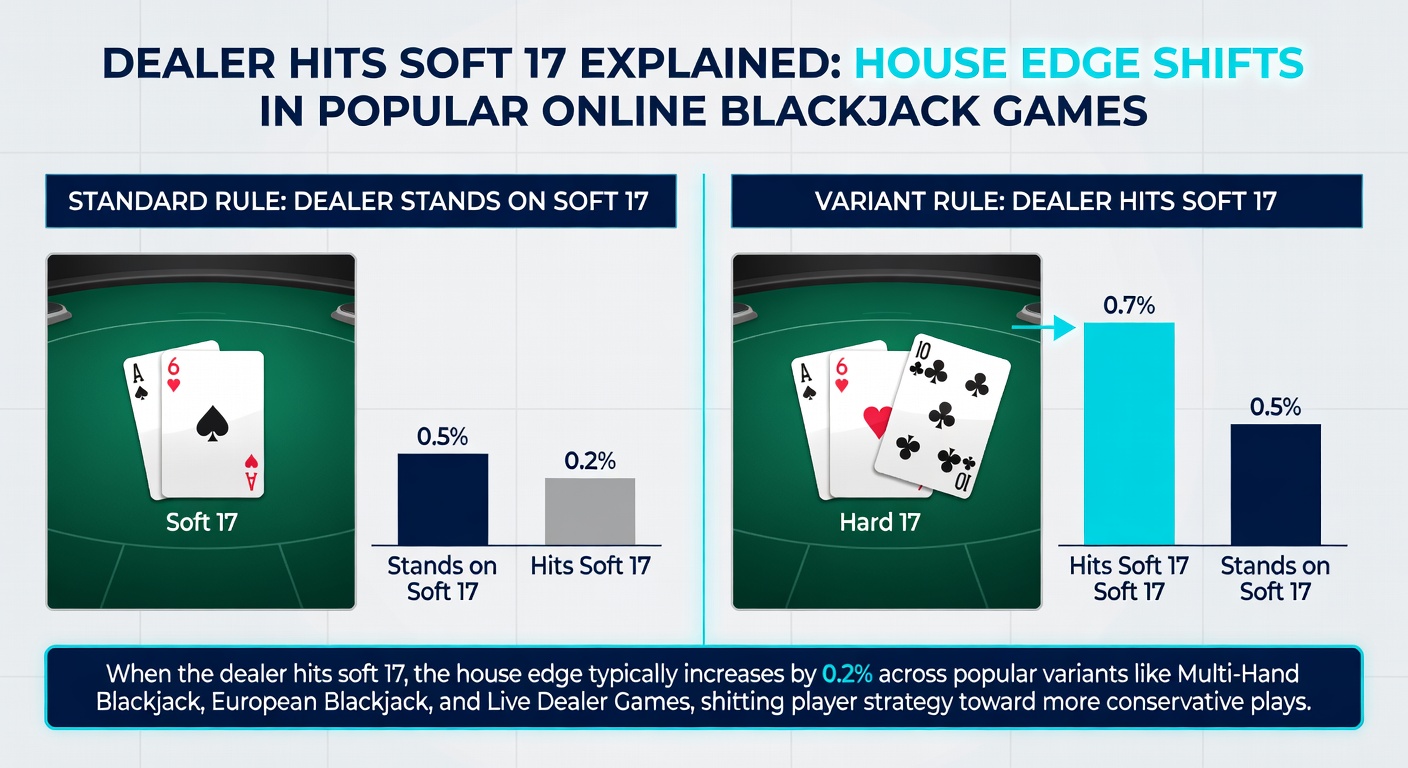
Deck counts amplify effects too; single-deck S17 dips to 0.15%, but H17 climbs to 0.35%, per combinatorial calculations shared in academic gaming papers. Online providers disclose these in fine print, empowering choices amid April 2026's surge in transparent rule filters.
Spotting Rules in Top Online Blackjack Variants
Popular titles showcase the split vividly; Evolution Gaming's Infinite Blackjack opts for H17 in live feeds, boosting immersion with unlimited seats, while NetEnt's Classic Blackjack stands on soft 17, catering to purists seeking lower edges. Pragmatic Play's live tables toggle per jurisdiction, with Canadian-licensed versions favoring S17 as per Alcohol and Gaming Commission of Ontario compliance trends.
Players who've scanned lobbies report patterns: micro-stakes games lean H17 for house padding, whereas high-roller salons offer S17 inducements; one aggregator's April 2026 audit found 55% of infinite variants hit soft 17, correlating with faster paces. Side bets complicate further, but core edges hold steady.
And consider multi-hand formats: these amplify rule impacts exponentially, since parallel plays multiply exposures; data indicates combined edges in H17 multi-hand exceed 0.5%, prompting strategy tweaks like conservative doubling.
Adapting Strategies to Dealer Soft 17 Rules
Basic strategy evolves precisely here; under H17, players hit 12 against dealer ace more aggressively, anticipating dealer improvements, whereas S17 charts insurance less often. Charts from strategy compendiums detail these, with hit/stand boundaries shifting by one rank in key spots.
Turns out, card counters exploit H17 too, as true counts adjust penetration values; simulations reveal 1-1.5% player edges achievable in favorable decks, though online shuffles curb this. Observers tracking April 2026 leaderboards note top earners gravitate to S17 tables, where variances align better with bankrolls.
Yet casual sessions benefit simply from rule awareness; filtering lobbies for S17 cuts effective edges without altering playstyle, a move data shows sustains playtime substantially.
Trends Shaping Soft 17 Rules in 2026
April 2026 brings fresh layers, with VR blackjack prototypes testing dynamic rules—dealers "hit soft 17" toggles mid-session for engagement, per beta trials from immersive studios. Aggregators report upticks in S17 demand, driven by edge-conscious apps integrating calculators seamlessly.
Regulatory scans across EU and US states push disclosures, ensuring lobbies highlight H17/S17 upfront; this transparency, coupled with AI advisors parsing edges, levels fields notably. One study from gaming research outfits projects S17 adoption rising to 45% by year-end, narrowing traditional gaps.
Live-dealer evolutions persist too, with multilingual tables standardizing S17 for global appeal, while crypto-exclusive sites experiment freely, unbound by legacy regs.
Wrapping Up the Soft 17 Edge
Dealer actions on soft 17 remain a cornerstone differentiator in online blackjack, where H17 bolsters houses by precise margins, yet S17 variants offer counterbalances accessible via informed selection. Data underscores the power of these rules—0.2% swings translate to real returns over volumes—while strategies and trends in April 2026 equip players astutely.
Those diving into lobbies find advantages in scrutiny; filtering by stand-on-soft-17 uncovers favorable plays, sustaining engagement amid evolving digital tables. Ultimately, grasping this mechanic unlocks blackjack's layered math, turning routine decisions into calculated edges.