28 Jun 2026
Demographic Evolution in Virtual Gaming Realms: Patterns Emerging Since 2020
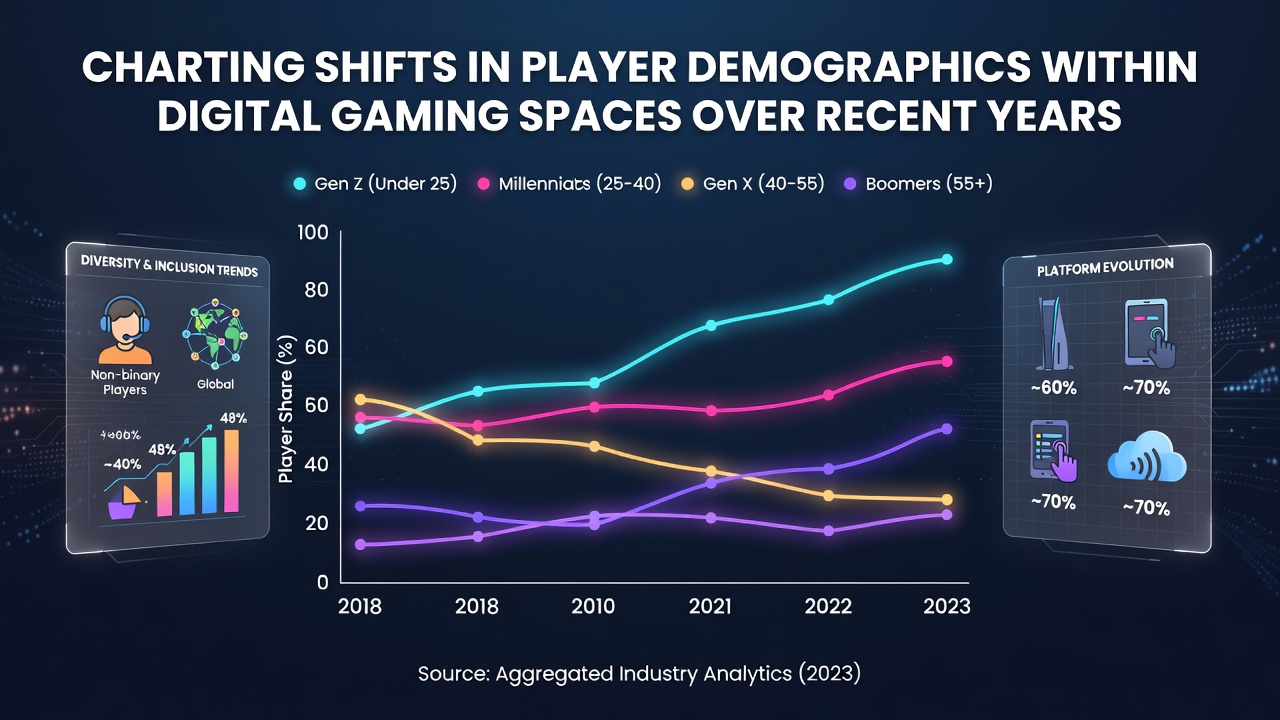
Digital gaming spaces have undergone notable demographic transformations over recent years, with data revealing steady expansions in player age ranges, gender participation, and geographic distribution since 2020. Researchers tracking these shifts point to broader accessibility through mobile platforms and evolving content libraries that attract wider audiences, while industry reports document how participation patterns have adjusted in response to technological advances and cultural changes.
Age Distribution Adjustments Across Platforms
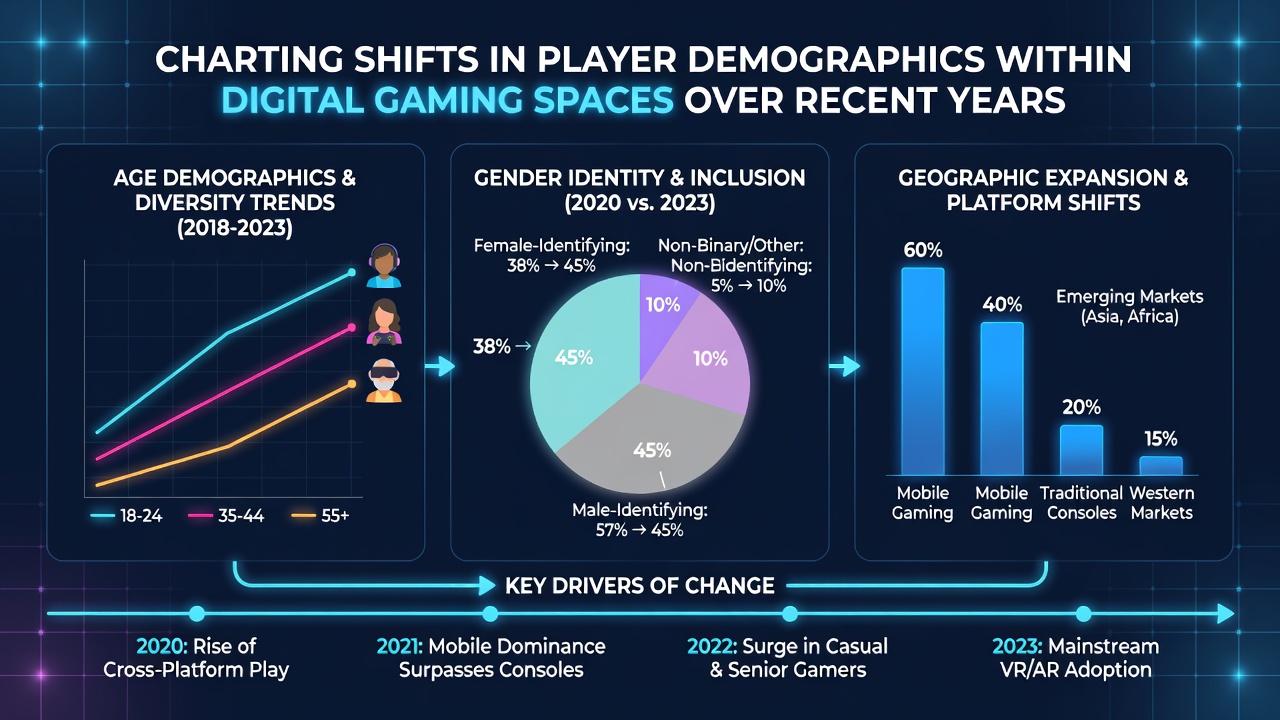
Surveys conducted by major industry bodies show that the average player age has risen gradually, with individuals over 35 now comprising a larger share of the overall population in many regions. The Entertainment Software Association has compiled figures indicating that adults between 35 and 44 represent one of the fastest-growing segments, driven in part by established franchises that encourage continued engagement over multiple years. Younger cohorts remain active, yet their proportional representation has declined slightly as older groups increase their involvement through cloud-based services and cross-platform titles.
Observers note that this age broadening coincides with the rise of subscription models, which allow families and long-term users to access libraries without repeated purchases. In June 2026, updated industry analyses highlighted continued momentum in these trends, particularly among users who first entered digital spaces during earlier console generations and have maintained habits into middle age.
Gender Participation and Representation Trends
Participation rates among female players have climbed consistently, with multiple studies attributing the change to increased availability of narrative-driven experiences and social features that support varied playstyles. Data from organizations in North America and Europe reveal that women now account for nearly half of all players in certain mobile and casual categories, whereas competitive genres continue to show more balanced but still male-leaning distributions. Academic examinations of player behavior suggest that inclusive character design and community moderation practices correlate with higher retention across genders, though exact causation remains under ongoing review by research teams.
Geographic Expansion Patterns
Player bases in Asia-Pacific territories have expanded rapidly, fueled by widespread smartphone adoption and localized content releases that resonate with regional preferences. Reports from Australian industry groups document similar growth trajectories, where participation has extended beyond traditional urban centers into suburban and rural areas thanks to improved connectivity infrastructure. European data similarly reflects rising engagement from Eastern member states, where economic development has enabled greater access to high-speed networks required for modern titles.
North American markets meanwhile demonstrate stable but diversifying populations, with increased involvement from Hispanic and Asian-American communities tracked through census-aligned gaming surveys. These geographic shifts carry implications for content localization strategies, as developers respond to audience composition changes with region-specific updates and multilingual support features.
Device and Access Method Influences
Mobile devices have emerged as primary entry points for many new participants, particularly in developing markets where dedicated hardware remains less common. Statistics compiled by international trade associations indicate that mobile gaming now dominates overall playtime metrics in several countries, creating pathways for demographics previously underrepresented on console or PC platforms. Cross-play functionality further integrates these groups, allowing seamless interaction between device types and reducing barriers that once segmented player communities by hardware access.
What's interesting here is how these device trends intersect with demographic variables. Studies from Canadian research institutions have found correlations between mobile preference and both age and income levels, suggesting that affordability plays a continuing role in shaping who enters digital spaces and through which channels.
Community and Social Dynamics
Online communities within digital gaming spaces reflect these demographic adjustments through evolving moderation practices and event programming. Tournament organizers report higher registration diversity in events that incorporate mixed formats, while streaming platforms document audience composition shifts that mirror broader participation changes. Research teams examining social interaction data note that cross-demographic collaboration occurs more frequently in cooperative modes, though competitive environments retain distinct subgroup patterns.
These developments unfold against a backdrop of regulatory adjustments in various jurisdictions, where agencies monitor participation rates without direct intervention in most cases. The cumulative effect appears in sustained growth across multiple metrics tracked by both commercial analysts and independent academic sources.
Conclusion
Overall patterns indicate that digital gaming spaces continue to incorporate wider demographic segments as technology lowers traditional barriers and content evolves to match diverse interests. Figures released through 2026 confirm ongoing adjustments rather than abrupt reversals, with age, gender, and geographic distributions each showing measurable movement since 2020. Continued monitoring by industry associations and research bodies will provide further clarity on how these trends develop in subsequent periods.