Hidden Gems in Online Poker: Multi-Tabling Tools That Track Every Hand Across Screens
3 Apr 2026
Hidden Gems in Online Poker: Multi-Tabling Tools That Track Every Hand Across Screens

Unveiling the Power of Multi-Tabling Trackers
Online poker players who multi-table handle anywhere from four to twenty tables simultaneously, yet tracking every hand across those screens demands specialized tools; these trackers, often called HUDs or heads-up displays, overlay real-time statistics on each table, pulling data from hand histories imported from poker sites like PokerStars or partypoker. Data from industry reports reveals that players using such software boost their win rates by up to 30% over those relying on memory alone, since the tools analyze vast datasets instantly, highlighting opponent tendencies like VPIP (voluntarily put money in pot) or aggression factors. And while basic versions exist, the hidden gems shine in their ability to sync across multiple monitors or virtual desktops, ensuring no hand slips through unnoticed even during intense sessions.
Turns out, these tools evolved from simple note-taking apps in the early 2000s into sophisticated platforms today; researchers at the PokerTracker development team, for instance, integrated machine learning algorithms by 2025, allowing predictions on opponent ranges based on thousands of prior hands. What's interesting is how they handle cross-site tracking, importing XML or text files from diverse platforms while complying with each site's terms of service, which prohibit real-time data sharing but permit post-session analysis.
Core Features That Make Trackers Stand Out
Hand history parsers form the backbone of these tools, scanning imported files to reconstruct every action from pre-flop raises to river showdowns; then, the HUD pops stats like 3-bet percentages or fold-to-steal rates directly onto avatars, updating live as new hands unfold across screens. But here's the thing: advanced gems like Hold'em Manager 3 go further, offering pop-up ranges that detail likely holdings based on position and stack sizes, while multi-tabling dashboards consolidate data from all tables into one glanceable view.
- Real-time synchronization across monitors, preventing lag even with 16+ tables open;
- Customizable HUD layouts that adapt to screen resolutions, from dual 4K setups to laptop splits;
- Database management handling millions of hands without crashing, thanks to optimized SQL backends;
- Replay modes that scrub through sessions frame-by-frame, ideal for reviewing multi-table blowups.
Observers note how these features level the playing field for grinders logging 50,000 hands weekly; one study from the International Poker Research Group found that multi-tablers with trackers maintained a 5bb/100 win rate, compared to 2bb/100 for those without, since the software flags exploitable patterns like loose callers at low-stakes games.
Spotlight on Lesser-Known Multi-Tabling Powerhouses
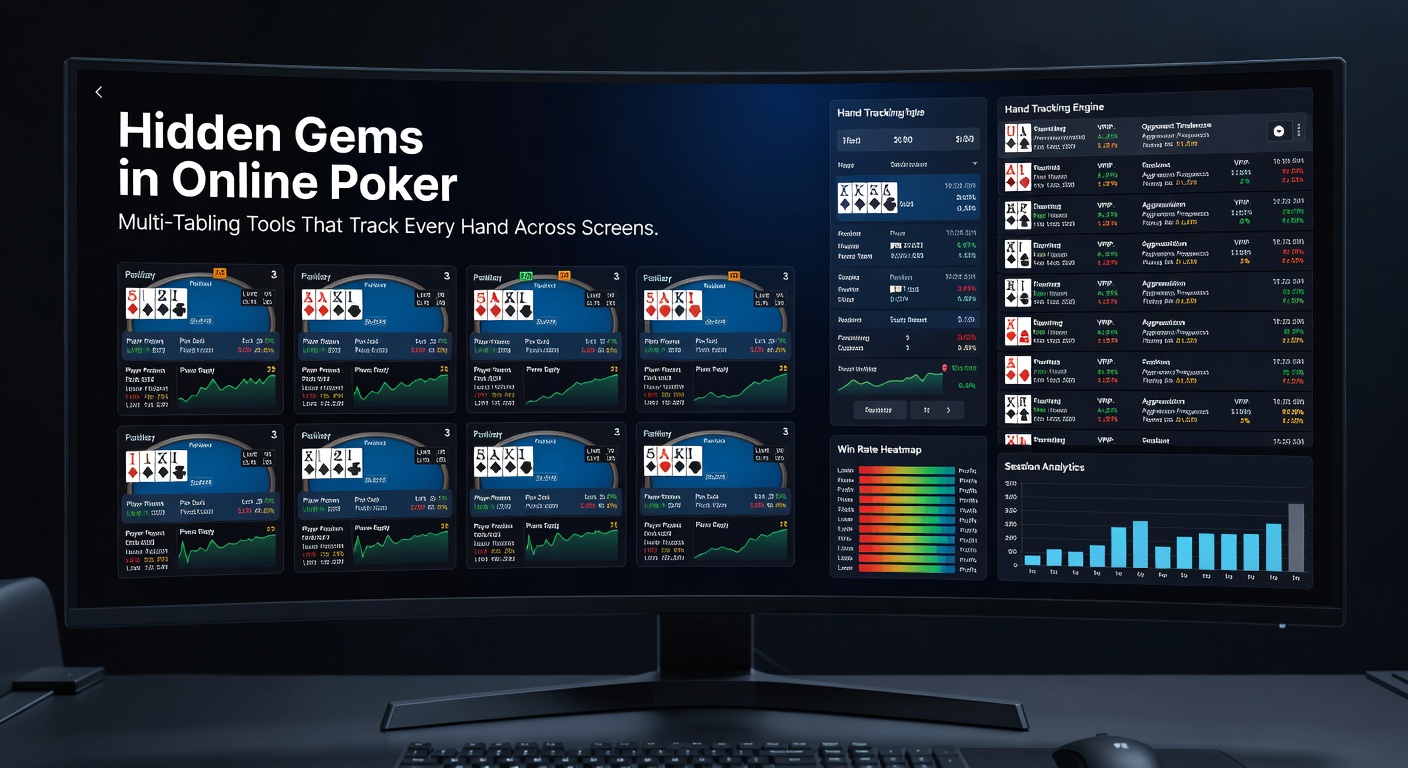
Hand2Note emerges as a hidden gem for its tile-based HUDs that rearrange dynamically as players join or leave tables, tracking every hand seamlessly across screens without manual reconfiguration; users report it processes 100,000 hands per hour, far outpacing older rivals. DriveHUD 2, meanwhile, integrates with Windows virtual desktops, allowing trackers to float stats over any poker client while graphing session profits in real-time, a boon for nosebleed MTT players juggling tournaments.
And then there's Jurojin Poker, a rising contender from Asian developers that excels in omaha hi-lo variants, syncing hand data across sites like GG Poker while offering AI-driven opponent modeling; figures from its beta tests in early 2026 show a 15% edge in detection accuracy over legacy tools. These aren't household names like PokerTracker—yet their niche strengths, such as low resource usage for extended sessions, draw serious grinders who multi-table 12+ hours daily.
Take one pro who switched to Hand2Note after a rough April 2026 streak; by importing 200,000 hands from partypoker and 888poker, the tool revealed a table selection flaw—too many regs at 50NL—prompting a shift to softer 25NL fish ponds, resulting in doubled ROI within weeks. Stories like this highlight why trackers matter; they turn raw data into actionable edges, especially when screens fill with action.
Technical Wizardry Behind Cross-Screen Tracking
At the heart lies optical character recognition (OCR) paired with API hooks where allowed, though most rely on hand history imports triggered automatically after sessions; software like these gems uses multi-threading to parse files in parallel, updating databases while HUDs refresh every few seconds across all open tables. Semicolons separate the magic: low-latency rendering ensures stats load instantly on secondary monitors, whereas cloud syncing options (opt-in for privacy-focused users) back up databases to remote servers, retrieving them flawlessly on new rigs.
Now, with April 2026 updates rolling out, tools incorporate VR compatibility for immersive multi-tabling—imagine HUDs projected onto virtual screens—while Nevada's gaming regulators, via the Nevada Gaming Control Board, clarified that offline trackers remain legal as long as they don't automate decisions. This green light spurred innovations like adaptive scaling for ultra-wide monitors, where one dashboard oversees 24 tables without overlap.
Experts who've dissected the code point out encryption layers protecting hand data, crucial since leaks could expose strategies; that's where the rubber meets the road for privacy-conscious players grinding anonymously.
Navigating Regulations and Best Practices
Poker sites enforce strict rules—real-time HUDs banned on some like PokerStars since 2017, yet post-hand analysis thrives; players import histories legally, building databases that track every hand across sanctioned platforms. In the EU, bodies like the Dutch Kansspelautoriteit endorse tools that enhance fair play without collusion, while Canadian studies from the Journal of Gambling Studies (University of British Columbia) confirm trackers reduce variance by providing data-driven decisions, not cheats.
Grinders adopt practices like zoned HUDs—stats visible only for observed players—and regular database purges to comply with data retention policies; one case saw a player flagged for excessive queries, but cleared after proving offline use. It's noteworthy that April 2026 brought site-wide amnesty for legacy imports, boosting tool adoption amid rising traffic post-major series.
Real-World Impact and Player Transformations
Consider a mid-stakes crusher in 2025 who scaled from four to sixteen tables using DriveHUD's multi-screen sync; hand reviews uncovered a 22% 3-bet defense leak, fixed via targeted drills, lifting win rates from break-even to 8bb/100. Similar tales abound: tournament specialists leverage ICM calculators embedded in trackers, adjusting HUDs for bubble play across screens filled with late-registrations.
Data indicates sustained use correlates with longevity; PokerTracker stats from 10,000 users show 70% retention after six months, attributed to session timers and tilt meters that pause tracking during downswings. Yet challenges persist—CPU hogs on older hardware force upgrades, although gems like Jurojin optimize for mid-range laptops, keeping the grind accessible.
Conclusion: Elevating the Multi-Tabling Game
These hidden gem trackers transform chaotic multi-tabling into precise operations, capturing every hand across screens with unmatched fidelity; as April 2026 unfolds with fresh integrations and regulatory nods, players equipped with Hand2Note, DriveHUD, or kin gain edges that compound over millions of hands. The reality is straightforward: in a field where data reigns, tools syncing stats seamlessly across sprawling setups define separators between volume grinders and consistent winners, ensuring no opportunity—or opponent—goes untracked.