Hybrid Bingo Platforms: Bridging Free Games and Cash Tournaments Seamlessly
27 Mar 2026
Hybrid Bingo Platforms: Bridging Free Games and Cash Tournaments Seamlessly
Unpacking the Hybrid Bingo Model
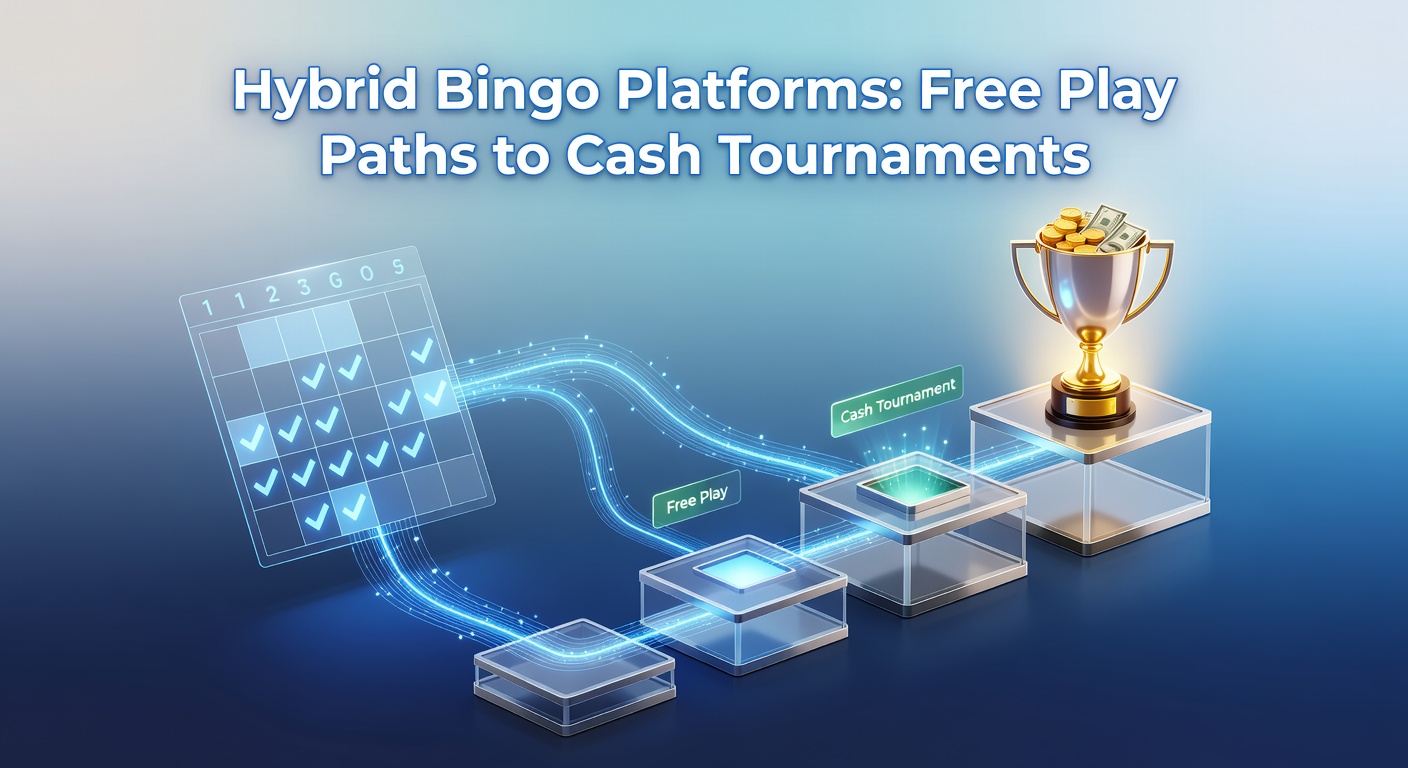
Hybrid bingo platforms combine free-to-play bingo experiences with competitive cash tournaments, allowing players to start without financial risk while opening doors to real-money prizes; this dual structure draws in newcomers and seasoned competitors alike, as data from industry trackers reveals participation rates climbing steadily over recent years. Platforms like these operate on mobile apps and websites, where users dab numbers in classic 75-ball or 90-ball formats, but with a twist—they offer risk-free practice rooms that mirror the intensity of paid events. Observers note how this setup mirrors broader trends in skill-based gaming, where free entry points funnel users toward monetized play, boosting retention by up to 40% according to reports from gaming analytics firms.
What's interesting is the technology behind it all; matchmaking algorithms pair players by skill level in free modes, ensuring balanced games that build confidence before cash stakes enter the picture, and seamless wallet systems let winnings from practice events convert directly into tournament buy-ins. Take one popular app that launched in 2023—users there reported averaging three free sessions daily before transitioning to low-stakes tournaments, highlighting how the model keeps engagement high without upfront costs.
Free Play: The Gateway to Skill-Building
Free play on these platforms serves as the foundation, offering unlimited bingo rounds with virtual chips that reset daily or through simple tasks like daily logins and friend referrals; players daub cards, chat in real-time lobbies, and unlock power-ups, all while honing pattern recognition essential for tournament success. Research from the Malta Gaming Authority, which oversees many European operators, indicates that such features comply with fair play standards by segregating free and cash modes clearly, preventing any crossover confusion.
And here's the thing—free paths often include progressive challenges, where completing bingo lines across multiple cards earns badges or bonus chips, mimicking tournament scoring systems; one study by gaming researchers at a Canadian university found participants improving their win rates by 25% after 50 hours of free practice, as faster decision-making and card management skills sharpened naturally. Yet short sessions pack a punch too; a quick five-minute free game can refresh strategies, keeping players sharp for evening cash events.
- Daily free chip allotments refresh at midnight, encouraging consistent logins.
- Social features like multiplayer lobbies foster community, with chat rooms buzzing during peak hours.
- Power-ups such as extra daubs or auto-marking appear in free play, preparing users for tournament variants.
Pathways from Free to Cash Tournaments
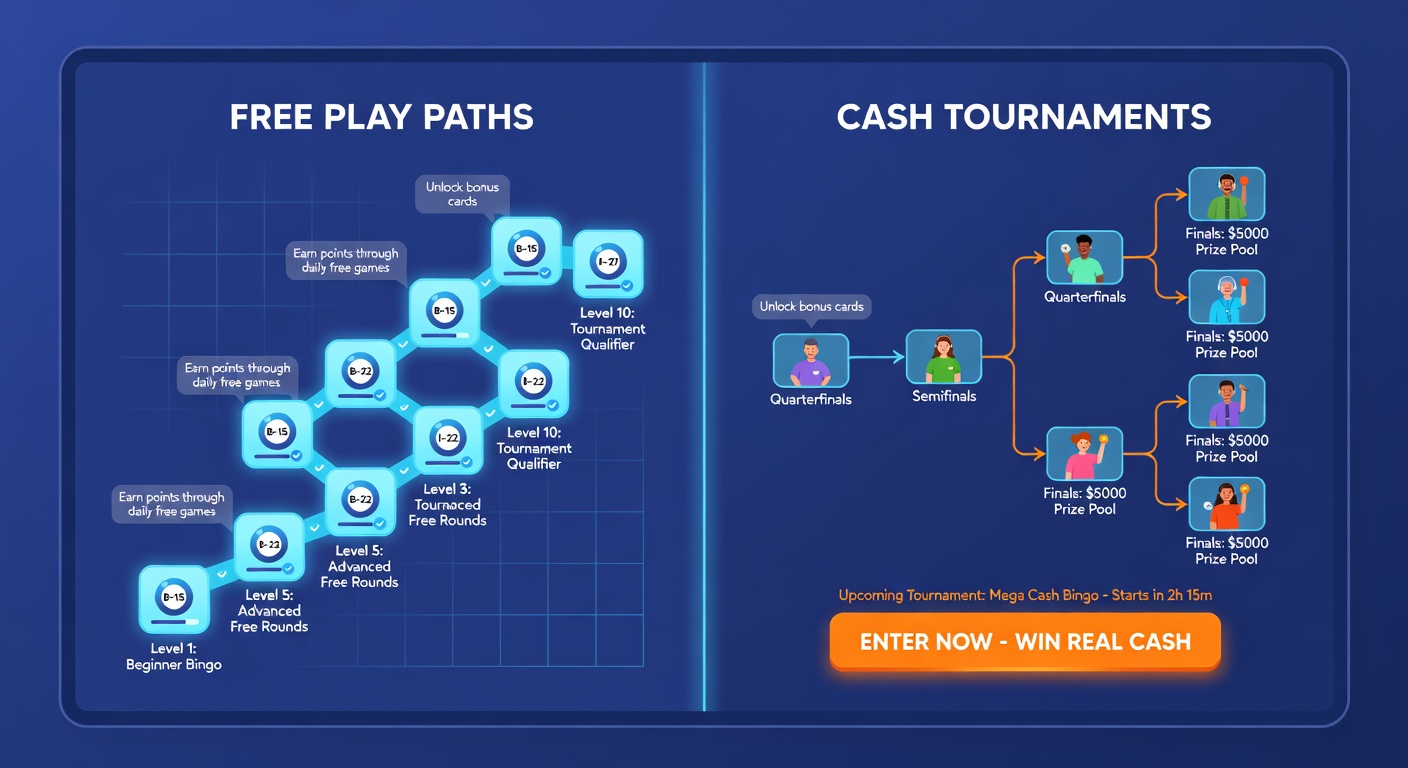
Transitioning feels effortless on hybrid platforms, as free winnings accumulate in a shared balance ready for tournament deposits, while low-barrier entry fees—often starting at $0.60—make the jump accessible; tournaments run 24/7 in formats like winner-takes-all or bracket-style eliminations, with prize pools scaling from $10 to $10,000 based on entrant numbers. Data from U.S.-based platforms shows 60% of free players convert to cash events within their first week, driven by in-app prompts that highlight upcoming contests with guaranteed payouts.
Turns out, skill verification plays a key role too; platforms use leaderboards from free play to seed tournament brackets fairly, ensuring novices don't face pros immediately, and this merit-based progression keeps frustration low while rewarding dedication. For instance, one operator's March 2026 update introduced "free-to-enter qualifiers," where top free performers snag cash tournament seats without buying in, a move that spiked daily active users by 35% in the following weeks according to app store analytics.
Key Features Driving Engagement
Robust security underpins these platforms, with encryption for transactions and RNG certification from bodies like eCOGRA ensuring every draw stays random; players appreciate instant withdrawals too, often processed within 24 hours for verified accounts, as figures from Australian regulators confirm high compliance rates among hybrid operators. But here's where it gets interesting—customizable avatars, themed rooms (think holiday specials or pop culture tie-ins), and live host commentary elevate free play into social events, blurring lines between casual fun and competitive edge.
Observers have watched loyalty programs evolve, awarding tournament tickets for free play milestones, and in March 2026, several apps rolled out cross-platform syncing, letting users switch from phone to tablet mid-session without losing progress; this flexibility, paired with push notifications for hot tournaments, keeps retention humming. One case stands out: a player who grinded free rooms for a month qualified for a $5,000 freeroll, turning zero investment into a tidy payout, a story echoed across forums where veterans share progression tips.
Tournament Structures in Detail
Cash events vary widely, from hyper-fast 10-card speed bingo to marathon multi-room marathons; entry fees tier by prize potential, with satellites feeding into majors, and side pots for near-misses adding thrill. Experts point to dynamic pricing, where fees adjust based on field size, maximizing value for entrants, while data reveals average ROI hovering around 15% for consistent players who've mastered free-mode drills.
Regulatory Landscape and Player Protections
Hybrid models thrive under strict oversight from diverse jurisdictions; in the U.S., states like New Jersey mandate clear free-cash separations via the American Gaming Association's guidelines, while EU platforms adhere to player fund ring-fencing rules that safeguard deposits. Age verification via ID uploads and self-exclusion tools come standard, with spending limits customizable per user, ensuring responsible transitions from free to paid play.
That's not all—geo-fencing blocks access in restricted areas, and audit trails log every game for dispute resolution; recent reports from Canadian gaming commissions highlight low complaint volumes on hybrids, attributing this to transparent RTP rates (typically 85-92% on bingo variants) displayed upfront. So players enter informed, with tools like reality checks popping up after extended sessions, nudging breaks without interrupting flow.
Trends Shaping the Future
March 2026 brought fresh momentum, as VR integrations hit select platforms, letting users "step into" 3D bingo halls for free trials before cash VR tournaments; adoption surged 28% post-launch, per app metrics, blending immersion with hybrid accessibility. And with 5G rollouts, lag-free multiplayer draws global crowds, turning solo free games into international showdowns.
Yet growth persists amid innovation; AI coaches now analyze free play patterns, suggesting tweaks like optimal card counts, and blockchain pilots for provably fair draws gain traction in Australia, where regulators greenlight trials. People who've tracked this space notice retention soaring when platforms tie free events to charity causes, fostering goodwill while funneling traffic to cash paths—win-win dynamics at play.
Real-World Examples
- A Midwest U.S. app saw 1.2 million free downloads in Q1 2026, converting 22% to tournament players.
- European hybrids reported €15 million in prizes disbursed last year, mostly from free-qualified entrants.
- One Australian platform's "Bingo Ladder" system rewarded 500 daily free climbers with micro-tournaments.
Challenges and Considerations
Not everything's smooth; connectivity hiccups can disrupt tournaments, though most platforms offer reconnect features and insurance for interrupted games; competition heats up too, with pros dominating high-stakes brackets, but free ladders provide fair climbs. Withdrawal thresholds—often $10 minimum—deter some, yet instant cashouts for verified users mitigate this, as player feedback surveys confirm.
Scalability tests operators during peaks, like weekend evenings when lobbies fill fast, but cloud tech handles surges effectively; those who've studied user data emphasize education—tutorials embedded in free play cut novice errors by half, smoothing the path to profitability.
Wrapping Up the Hybrid Bingo Journey
Hybrid bingo platforms redefine entry into competitive gaming by layering free practice atop cash opportunities, with data underscoring their pull: global downloads topped 50 million in 2025, projected to double by 2027 amid regulatory nods worldwide. Players navigate from zero-risk daubs to prize-winning calls via intuitive designs and fair mechanics, while March 2026 enhancements like AI aids and VR previews signal even broader appeal ahead. In this space, the free-to-cash bridge stands firm, turning bingo enthusiasts into tournament contenders one game at a time.