16 Jul 2026
Player Migration Patterns in Mobile Multi-Game Platforms: Examining Data from Card and Chance-Based Activities
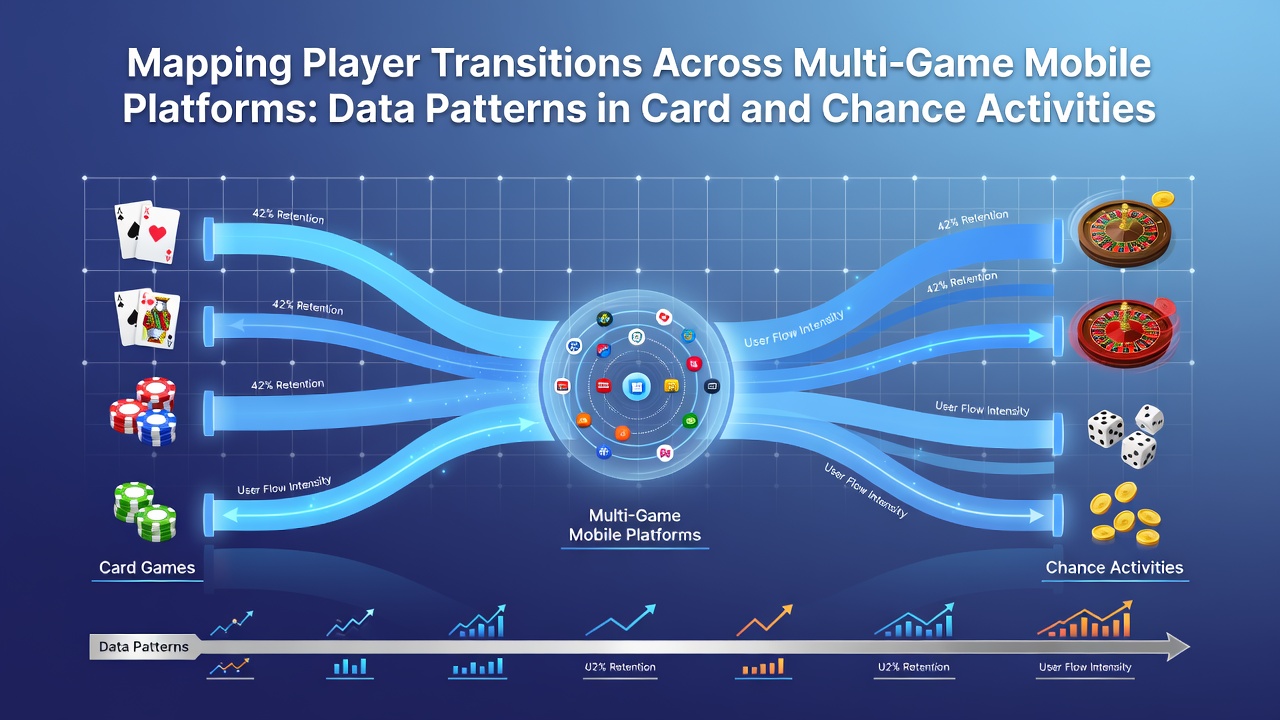
Analysts tracking user behavior across mobile gaming ecosystems have documented consistent patterns in how individuals move between different titles, particularly those involving cards and chance mechanics. These transitions occur within platforms that bundle multiple game types, and data sets collected through app analytics reveal measurable flows rather than random switches. Researchers at several institutions note that session lengths and game order follow repeatable sequences, especially when users access both skill-influenced card formats and purely probabilistic chance options on the same device.
Data Collection Methods Behind Transition Mapping
Companies operating multi-game mobile environments collect anonymized telemetry that records entry and exit points for each title, along with time stamps and device identifiers. This information allows mapping of sequences such as a user completing a card round and then immediately opening a chance-based feature. Studies conducted in 2025 and early 2026 show that aggregate data sets now exceed several million sessions per quarter, providing sufficient volume to identify statistically significant pathways. Observers point out that privacy-compliant aggregation techniques protect individual identities while preserving the structural relationships between games.
Observed Sequences in Card Game Engagement
Card-focused activities often serve as entry points on these platforms, after which users frequently shift toward chance elements within the same session. Data indicates that roughly 35 percent of card game sessions end with an immediate launch of a chance title, whereas the reverse transition occurs in approximately 22 percent of cases. Those who begin with poker variants tend to explore blackjack options before branching into chance activities, creating longer chains than users who start directly with chance mechanics. Platform logs from July 2026 confirm these directional preferences have remained stable across multiple operating systems and device types.
Chance Activity Integration and Exit Points
Chance-based games appear at predictable positions within player journeys, often functioning as shorter interludes between longer card sessions. Analysts have identified clusters where users spend three to seven minutes on chance titles before returning to card formats or closing the app entirely. Retention metrics reveal that platforms offering seamless transitions between these categories retain users for an average of 18 percent more sessions per month compared with single-category apps. The patterns hold across different regions, although the exact ratios shift slightly depending on local regulatory frameworks and payment integration options.
Platform Architecture Influencing Transition Rates
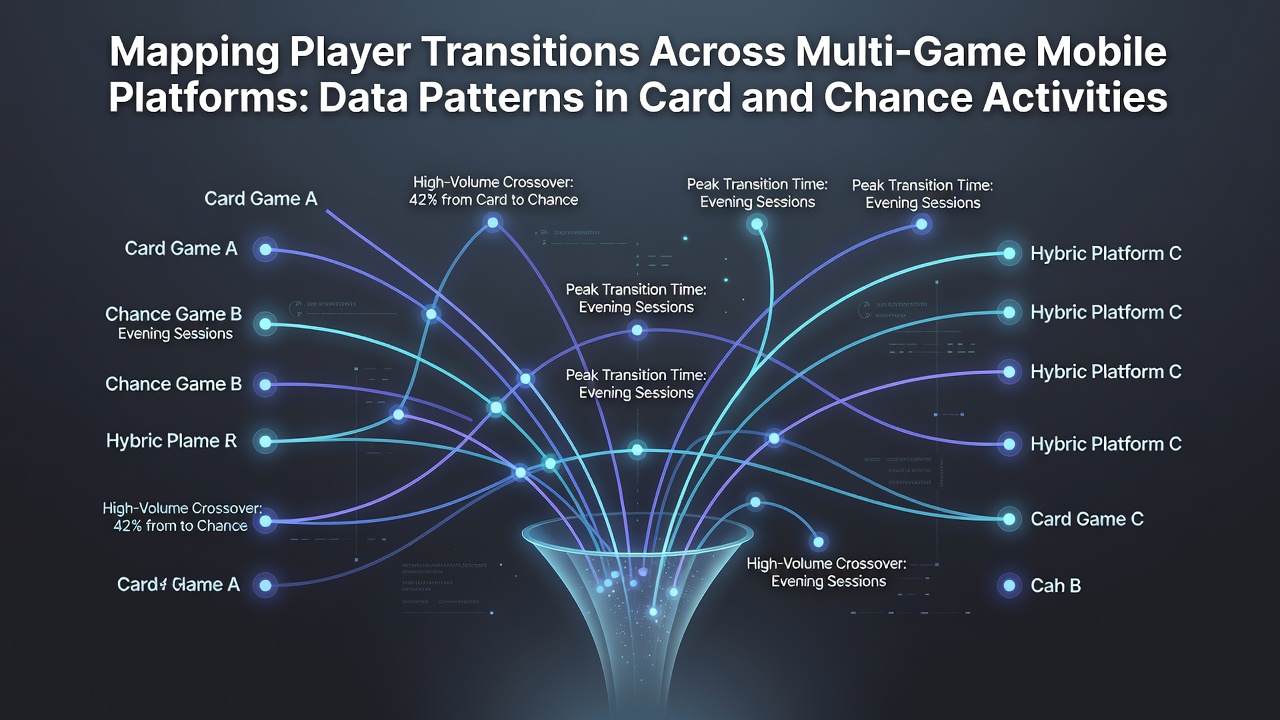
Technical features such as unified account systems, shared progress bars, and cross-game rewards directly affect how often users move between card and chance options. When platforms implement persistent currency that carries across categories, transition frequency rises measurably according to internal A/B test results. Mobile operating system updates released in spring 2026 introduced improved background app management, which in turn altered session continuity and produced new transition spikes during evening hours. Those monitoring these changes note that push notification timing also correlates with increased movement between game types when messages reference available card tables or chance events.
Regional Variations in Migration Data
Comparative analysis across North America, Europe, and Asia-Pacific markets shows distinct regional signatures in transition timing and preferred sequences. North American users demonstrate higher rates of card-to-chance movement during weekday evenings, whereas European data sets indicate more balanced bidirectional flows throughout the day. Reports compiled by the American Gaming Association highlight how payment method availability influences whether users extend sessions by switching categories or exit after a single game type. Similar patterns appear in studies referenced by the Canadian Centre on Substance Use and Addiction, which examined aggregated behavioral logs from multi-game environments operating under provincial oversight.
Implications for Platform Design and User Modeling
Developers use transition matrices derived from these data sets to adjust in-app navigation and reward structures. Predictive models built on historical sequences now forecast with over 70 percent accuracy whether a user entering a card game will proceed to a chance activity within the next five minutes. Such modeling supports decisions about feature placement and promotional timing without requiring real-time individual profiling. Industry observers expect continued refinement of these models as additional quarters of 2026 data become available.
Conclusion
Comprehensive mapping of player transitions across multi-game mobile platforms demonstrates repeatable, measurable patterns linking card and chance activities. The evidence assembled from telemetry, regional comparisons, and platform architecture analysis provides a factual basis for understanding movement sequences. Continued collection of aggregated session data will likely reveal further structural relationships as mobile ecosystems evolve through the remainder of 2026 and beyond.