30 Jul 2026
The Inner Workings of Random Number Generators in Online Card Games
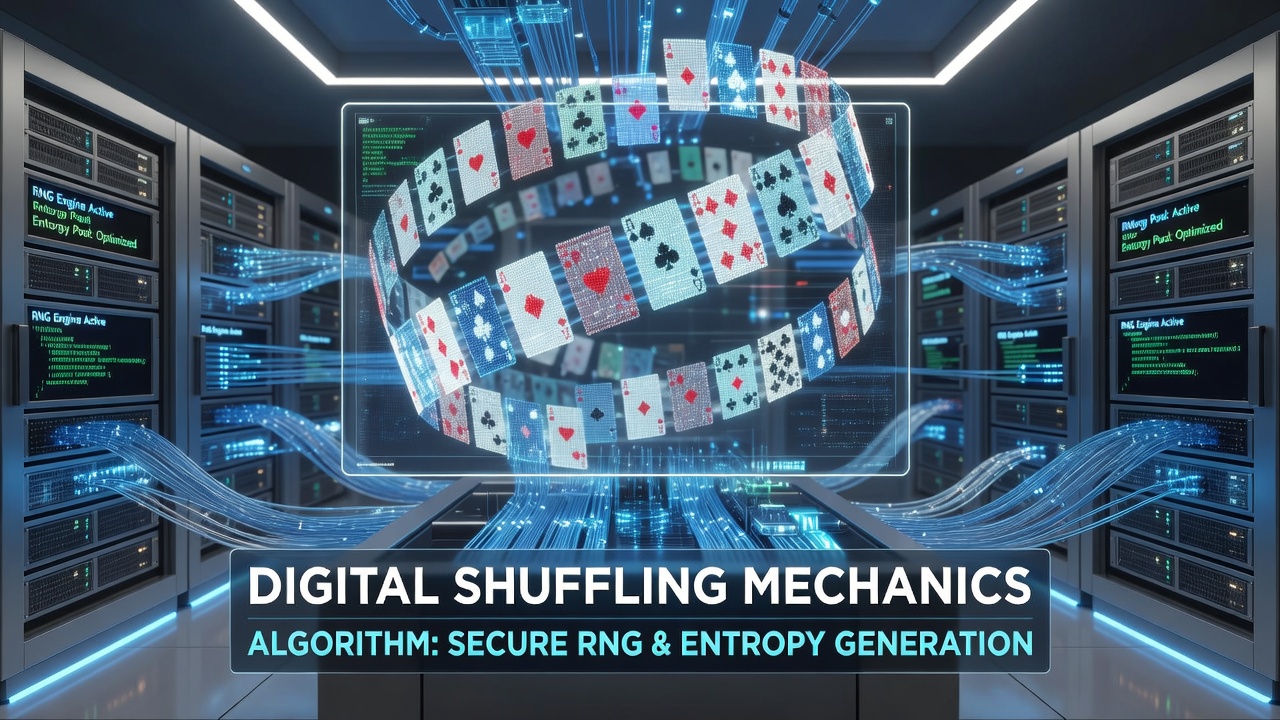
Digital card shuffling systems form the backbone of fairness across popular online gaming platforms, and they depend on sophisticated algorithms that produce sequences indistinguishable from physical randomization while operating at speeds that support millions of hands each day. These systems draw from pseudorandom number generators that seed initial values from hardware events such as thermal noise or clock jitter, then apply mathematical transformations to create long strings of numbers that map directly onto card positions in a virtual deck.
Core Algorithms Behind Virtual Shuffles
Most platforms implement a version of the Fisher-Yates shuffle adapted for computational efficiency, where each card swaps positions with another selected through the generator output, and this process repeats until the entire deck reaches a uniform distribution that prevents any predictable ordering. Researchers at various institutions have verified that properly implemented versions of this algorithm achieve statistical randomness meeting standards set by bodies like the National Institute of Standards and Technology, whose guidelines on random bit generation help developers test output against expected uniformity metrics.
Modern implementations often layer additional entropy sources on top of the base generator, incorporating player actions such as click timing or network latency to further vary the seed values, while cryptographic hash functions like SHA-256 scramble intermediate results so that reverse engineering the sequence becomes computationally infeasible for external observers.
Certification and Ongoing Testing Protocols
Independent laboratories evaluate these systems before deployment, running millions of simulated shuffles to confirm that every possible deck arrangement appears with equal frequency and that no detectable bias emerges across repeated trials. Platforms must submit fresh test results whenever they update software or migrate to new server hardware, and regulatory frameworks in regions including Nevada and several Australian states require annual re-certification to maintain operating licenses.
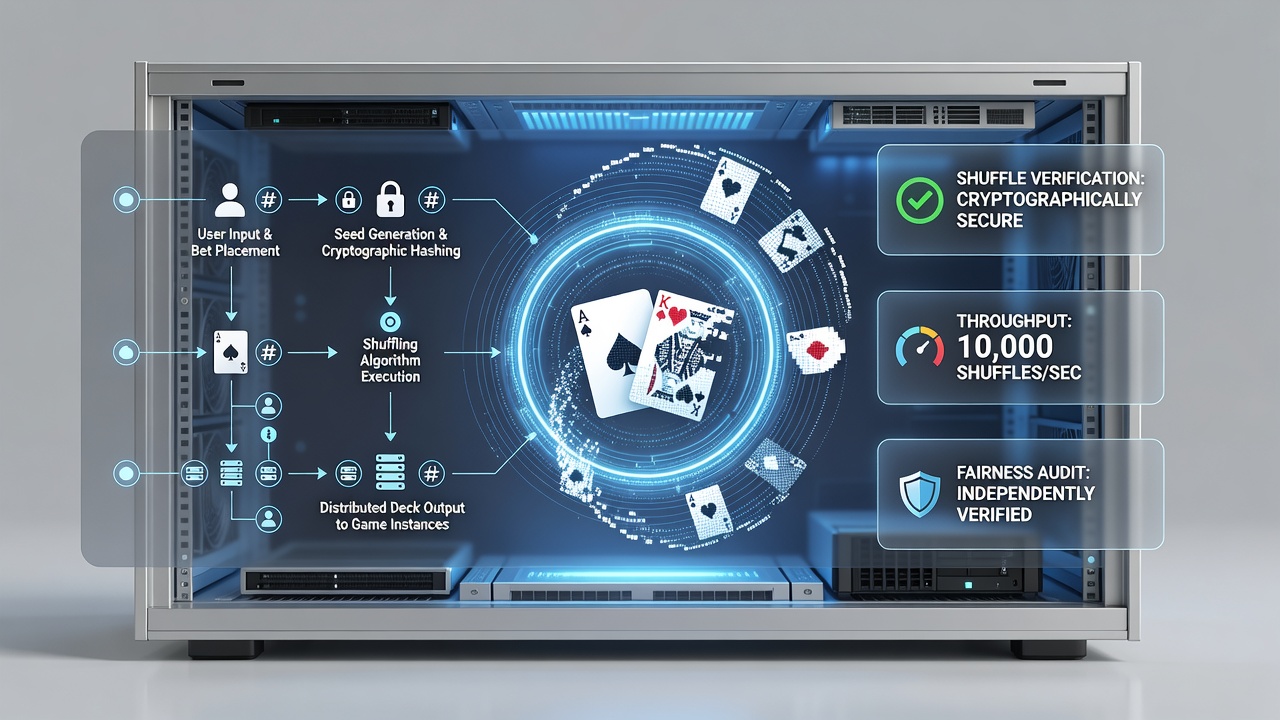
What's notable is how these labs apply chi-square and serial correlation tests alongside more advanced spectral analysis to detect subtle patterns that might slip past simpler checks, and data compiled by the Victorian Commission for Gambling and Liquor Regulation shows consistent pass rates above 99 percent for properly maintained generators used by licensed operators. Continuous monitoring tools run in the background on live servers, flagging any deviation from expected statistical profiles within seconds and triggering automatic shutdowns if anomalies appear.
Security Measures Protecting the Process
Encryption wraps the generator output during transmission between servers and client devices, preventing interception that could expose upcoming card sequences, while access controls limit physical and digital entry to the systems holding the core algorithms. Some operators employ hardware security modules that store seed material in tamper-resistant chips, and breach attempts trigger immediate alerts that prompt forensic reviews by both internal teams and external auditors.
July 2026 brought updated technical bulletins from several North American regulators emphasizing requirements for post-quantum cryptographic primitives in future generator designs, reflecting concerns that advancing computational power could eventually threaten older hashing methods still in limited use. Those updates prompted several major platforms to accelerate migration timelines, integrating lattice-based algorithms alongside existing standards without interrupting service for players.
Integration Across Popular Gaming Sites
Large operators integrate these shuffling engines directly into game servers that handle multiple variants of poker, blackjack, and other card titles simultaneously, routing output from a central generator pool so that each table receives an independent stream while sharing the same underlying entropy source. Smaller sites often license white-label solutions from established providers, inheriting certified generators that already meet multi-jurisdictional requirements and thereby reducing the burden of individual testing.
Observers note that real-time dashboards available to compliance officers display live metrics such as entropy pool levels and shuffle completion times, allowing rapid identification of any slowdowns that might indicate hardware strain or attempted interference. Case studies published by research groups at technical universities illustrate how minor configuration errors in early generator implementations once produced detectable biases, yet subsequent patches restored uniformity without players noticing any change in game flow.
Conclusion
Digital shuffling mechanics continue to evolve alongside advances in cryptography and regulatory expectations, maintaining the integrity of online card play through layered technical safeguards and rigorous third-party validation. As platforms scale to serve growing audiences, the emphasis remains on verifiable randomness that players and regulators alike can trust, supported by transparent testing regimes and adaptive security architectures that respond to emerging threats.